
Tasks (so far)
- Discovery research
- Product design strategy
- Branding
- Project management
- Workshop
Tools
- Figma & Figjam
- Google Form
- Power BI
- Atlassian
- Apple IOS
- GenAI
Empathize (Diverge) – Discovering the problem
We were at the stage of exploring the problem area and wanted to understand the deeper struggles behind people’s frustrations with productivity.
We noticed a saturation of digital productivity tools in the market, yet users remained unsatisfied — not just with individual apps, but with the whole experience of using them.
That raised some key questions for us to explore:
- What are the root frustrations students and SMEs face with current productivity tools?
- What prevents them from achieving their goals?
- Where can Stuudie bridge the gap?
Before jumping into development, one of our teammates had already proposed a rough MVP. But as the skeptical researcher of the group, I challenged us to pause and start with understanding.
If we were going to build something that truly helps, we needed to do proper research — from the start.
Research – Understanding users and the market
We set out to uncover the challenges students and professionals face with productivity apps — to understand their context, their behaviors, and the relationships they have with the tools they use.
So, I created an incentivized user survey program to gather both quantitative and qualitative data. We advertised it both online and physically in Belgium and Turkey to ensure diversity in our sample.
- Platform: Google Forms
- Research method: Mixed (qualitative & quantitative)
- 73 respondents
- Demographics: Users from Asia and Europe
In parallel, we analyzed the market and competition — studying trends and benchmarks across existing productivity apps globally to identify where gaps and opportunities might lie.
Making sense of data
A day later, with enough responses from our incentive program (or at least I thought it was), we had data that started to reveal patterns — how users think, behave, and feel about productivity tools today.
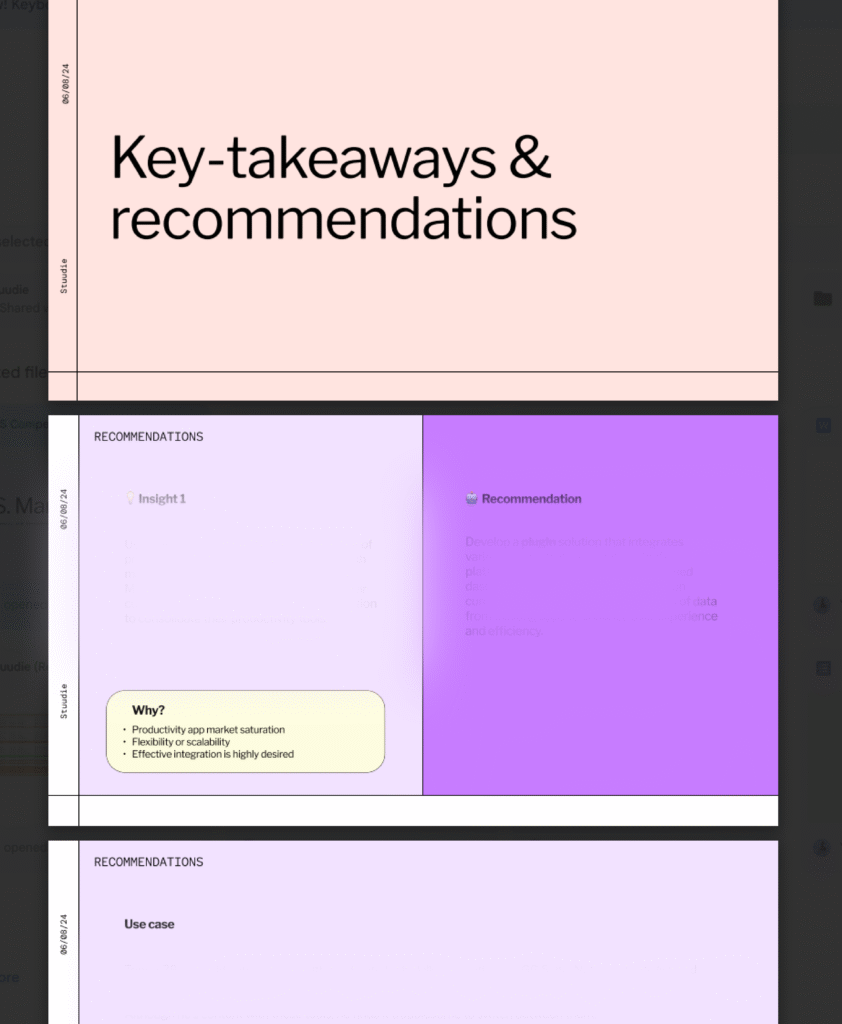
With the help of a data engineer friend (really, thank you 🙏), I:
- Built user personas based on attitudes and behaviors
- Mapped out contextual insights into app usage
- Identified pain points, frustrations, and unmet needs
- Captured user aspirations and goals
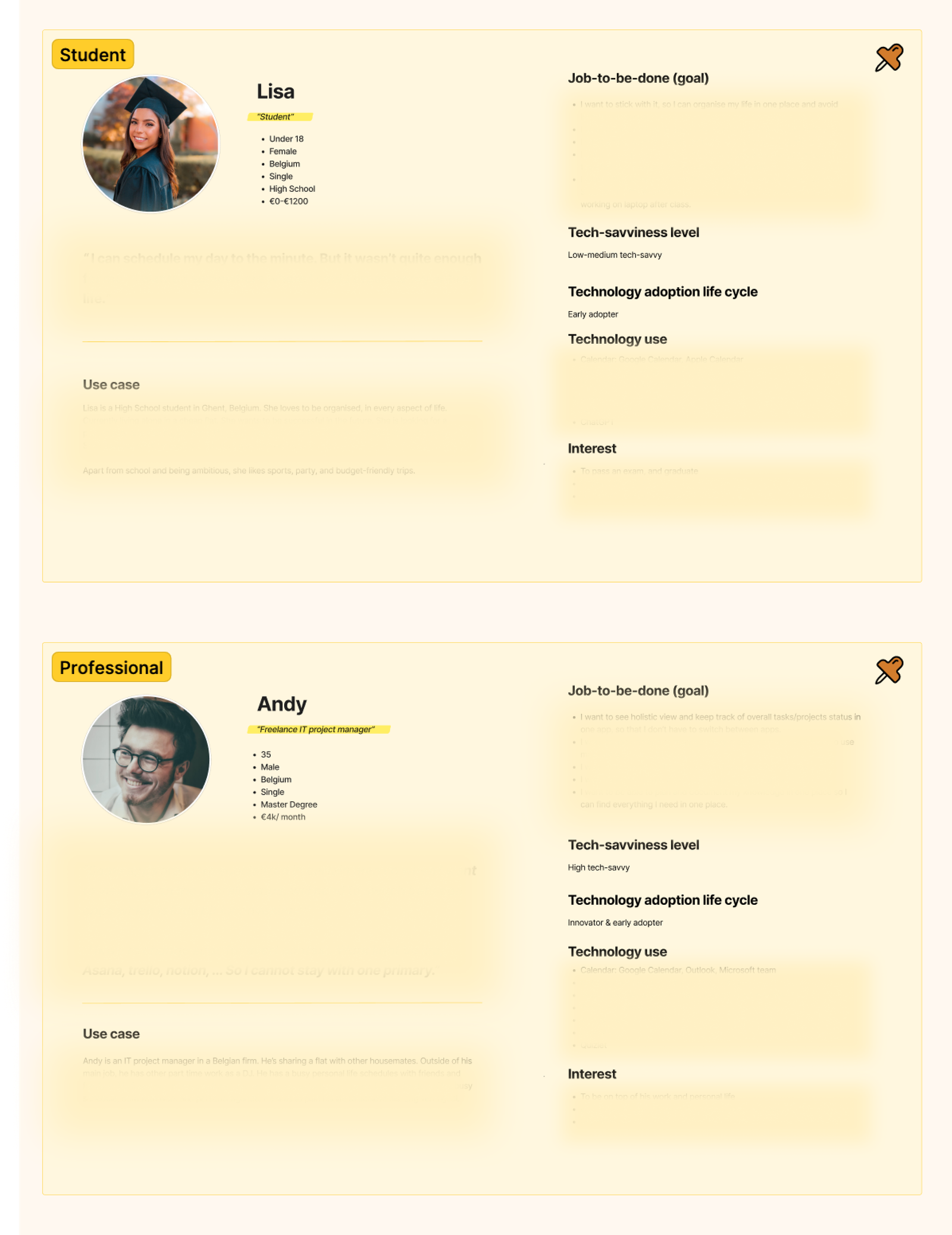
Apart from the infographics that my data engineer friend helped with, I used an Affinity Diagram (with help from AI tools) to cluster findings and identify themes where I could.
But even with this foundation, I wasn’t ready to move on.
While our data gave a direction, it wasn’t enough to understand why users behave the way they do. I wanted to conduct further in-depth research to explore users’ day-to-day contexts and behaviors. We’re willing to step a little bit back.
I would like to gain more confidence in data to mitigate the risk as much as possible — especially since productivity behaviors have evolved significantly in recent years.
Sure, there were faster shortcuts to continue, but I purposefully chose a slower, more thoughtful path.
To truly understand the problem, you have to be willing to go deeper, even when it takes more time and effort.
Because for me, problem discovery — and deciding which problem to solve — is the most crucial stage of any project.
I told my team that we will fetch out a bit more data, and then move on to other research methods to dig deeper.
Outside the double diamond
While leading the research, I also took initiative to support the team’s overall structure, identity, and collaboration.
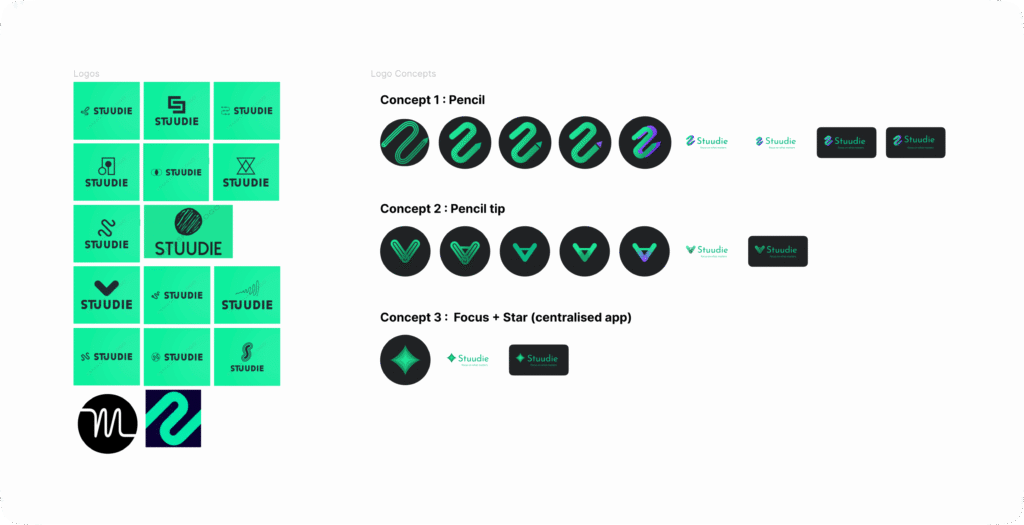
Branding
I organized a branding workshop to ensure every team member’s voice was heard.
We agreed that simplicity would be our guiding principle — a reflection of what we wanted the app to stand for: calm, focus, and clarity.
The company is officially registered.
Team Leadership
I helped the team organize documentation, workflow management, workshops, and project planning.
We adopted Lean and Agile methodologies to keep the process iterative and flexible.
Throughout the journey, I facilitated workshops to align our vision and structure our next steps.
Reflection – Where we are now
After some pause from last year due to life circumstances, we are ready to jump into it again. Our mission remains strong.
We plan to continue exploring and shaping Stuudie into a product that helps people stay productive without losing themselves in the process.
We plan to gather more user data, and in-depth information about them. I’m greateful for all learning opportunities.
I’m excited about what lays ahead!